

Care Economy

Women’s low labour force participation in India is closely linked to the unequal burden of unpaid care and domestic work. Evidence from India’s Time Use Survey shows that women and girls spend significantly more time on unpaid household and caregiving responsibilities than men and boys, while paid care work remains largely feminised, undervalued, and characterised by low wages and limited social protection. Addressing the care economy is therefore critical to advancing women’s economic participation and building inclusive labour markets.

IWWAGE’s work on the care economy focuses on:

Building evidence through collaboration

Generating and co-creating policy-relevant evidence in partnership with research institutions, governments, and civil society to highlight the scale, value, and distribution of care work.

Strengthening care and social infrastructure

Advocating investments in care services and enabling infrastructure such as childcare, elder care, piped water, clean energy, and reliable electricity to reduce women’s unpaid care burden.

Improving measurement and visibility of care work

Advancing better tools and methods to measure unpaid and paid care work, ensuring women’s contributions are visible in data, policy, and planning processes.

Advancing rights and protections for care workers

Supporting policy dialogue on fair wages, social protection, and access to entitlements for paid care workers.

Influencing policy and advocacy

Using evidence to inform policy across national and sub-national levels through sustained engagement with key institutions, including NITI Aayog, the Ministry of Women and Child Development, and the Ministry of Rural Development.

This body of work has strengthened national and international attention to care workers’ needs, including during India’s G20 Presidency in 2023, and contributed to IWWAGE being recognised by UNESCAP and UN Women (Regional Office) as a Care Champion in the region for 2024.
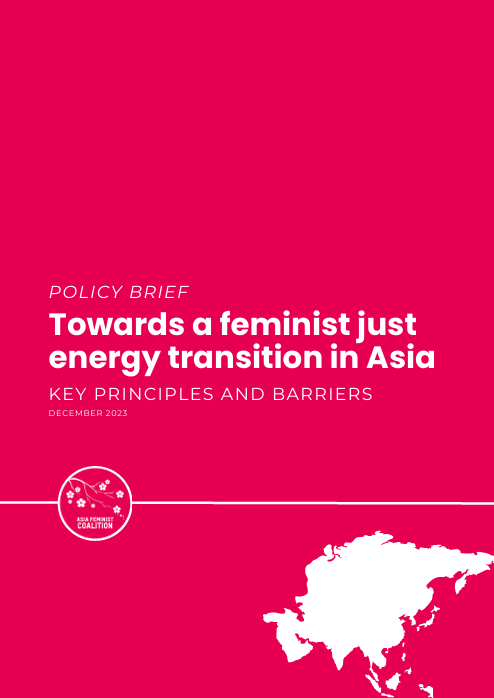
Towards A Feminist Just Energy Transition in Asia

Energy transitions are not gender-neutral, and their impacts vary across social groups. In Asia, women—especially in rural and low-income communities—are disproportionately affected by energy poverty, environmental degradation, and climate change. Limited access to assets such as land and capital restricts women’s ability to adapt to transition processes. At the same time, women’s greater burden of unpaid care work reduces their access to paid employment, education, and training, weakening their capacity to navigate structural transitions. With Asia home to half of the world’s population and a large share living in poverty, these vulnerabilities are further intensified in the face of climate shocks (Oxfam 2022).
Learning note

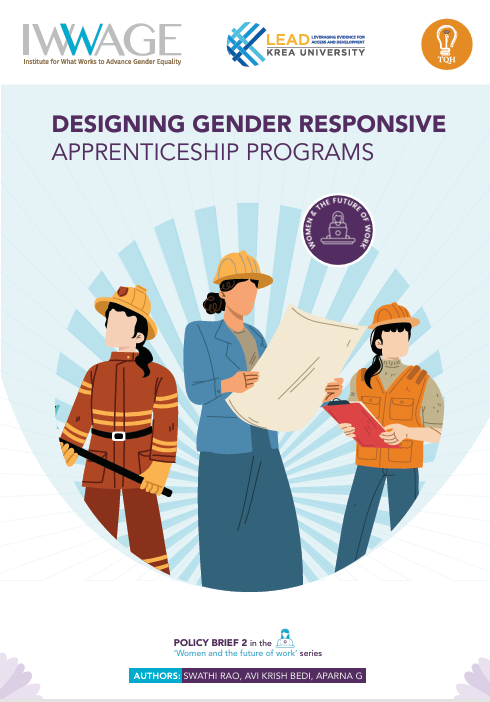
Designing Gender Responsive Apprenticeship Programs

The National Apprenticeship Promotion Scheme (NAPS) and the National Apprentice Training Scheme (NATS) aim to enhance skill development and boost employment opportunities in India. However, the overwhelming male dominance in these programs highlights a significant gender gap in their implementation. To address this, several measures are recommended to promote greater female participation. Key recommendations include collecting gender-disaggregated data to understand women’s choices, incentivising employers to hire more women apprentices, and conducting awareness campaigns targeted at women. Additionally, creating gender-sensitive infrastructure and addressing social norms that limit women’s participation are essential steps toward inclusivity. Integrating NAPS with the upcoming DESHStack portal will further enhance women’s access to apprenticeship opportunities and improve their transition into the workforce. Implementing these steps will create a more gender-responsive apprenticeship system, fostering economic growth and empowerment for women.
Learning note

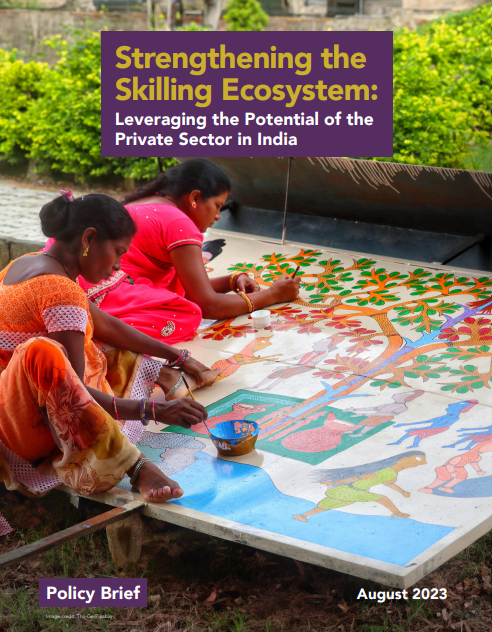
Strengthening the Skilling Ecosystem: Leveraging the Potential of the Private Sector in India

India faces a unique challenge with one of the world’s lowest female labour force participation rates and a large informal workforce. As nearly 50 million young women remain neither in education nor employment, it is crucial to bridge the gap between available jobs and the skills required by the market. While the government has led the charge in skilling efforts, the private sector holds immense potential to play a pivotal role in this ecosystem. Despite efforts through initiatives like the National Skill Development Corporation (NSDC), only 36% of companies in India currently conduct in-house training. Barriers such as societal norms, mobility restrictions, and lack of awareness particularly hinder women’s participation in vocational training. To address these gaps, there is a need for stronger private sector engagement in skill development and workforce placement. By mobilising Corporate Social Responsibility (CSR) funds, creating local infrastructure, and offering financial and non-financial support for entrepreneurship, the private sector can foster inclusive growth. Additionally, businesses can leverage their networks to connect disadvantaged groups with market opportunities, offering targeted placement support to enhance women’s participation in the workforce. Unlocking India’s latent talent through collaboration between government and private enterprises will help build a more skilled, diverse, and employable workforce, ensuring sustainable economic growth and increased female labour force participation.
Learning note

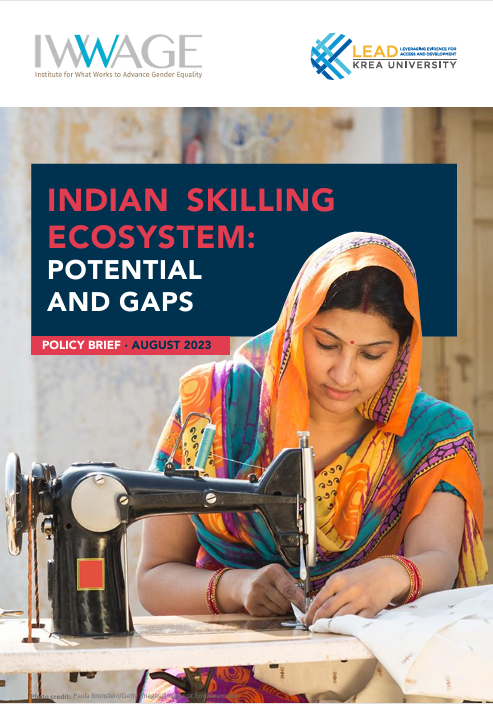
Indian Skilling Ecosystem: Potential and Gaps

The Indian skilling ecosystem has seen significant investment to position the country as a global skill capital. However, despite these efforts, India continues to face challenges in female labour force participation (FLFP). Evidence shows that over half of women outside the workforce express a desire to gain skills for employment, yet they face multiple barriers such as limited access to training, gender-normative course selections, and poor job retention. This brief explores the gaps in India’s skilling ecosystem, highlighting the need for gender-inclusive training programmes, better data collection on women’s participation, and addressing structural barriers that impede women’s progress from training to employment. Key recommendations include creating gender-responsive infrastructure, offering tailored curricula for women, and improving post-placement support to ensure higher retention in the workforce. By addressing these challenges, India can maximise the potential of skilling programmes to enhance women’s economic empowerment and drive inclusive economic growth.
Learning note

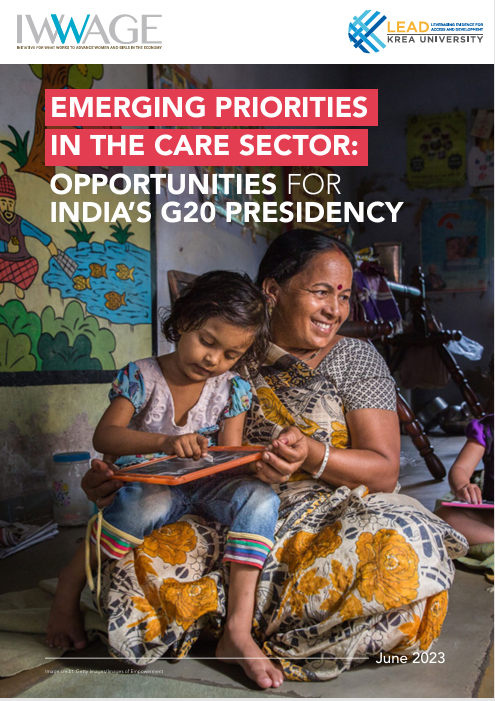
Emerging Priorities in the Care Sector: Opportunities for Indias G20 Presidency

Care work-both paid and unpaid-plays a vital role in supporting economies and societies. However, it is predominantly shouldered by women, which limits their ability to participate in the formal workforce. As India assumes the G20 presidency, there is an opportunity to spotlight the care sector as a driver of gender-responsive development. This brief explores the potential of the care economy, highlighting the need for investments in care infrastructure and care workers. By recognising care as a critical sector, and investing in childcare, elder care, and support for persons with disabilities, India can unlock new economic opportunities for women. Adequate investments in infrastructure and trained care workers can reduce the burden on women, enabling them to access employment and contribute to the economy. The brief also calls for public and private sector collaboration to enhance social security, fair wages, and decent working conditions for care workers. Addressing the invisibility of unpaid care work through better measurement tools is key to acknowledging women’s contributions and integrating care work into economic policies.
Learning note

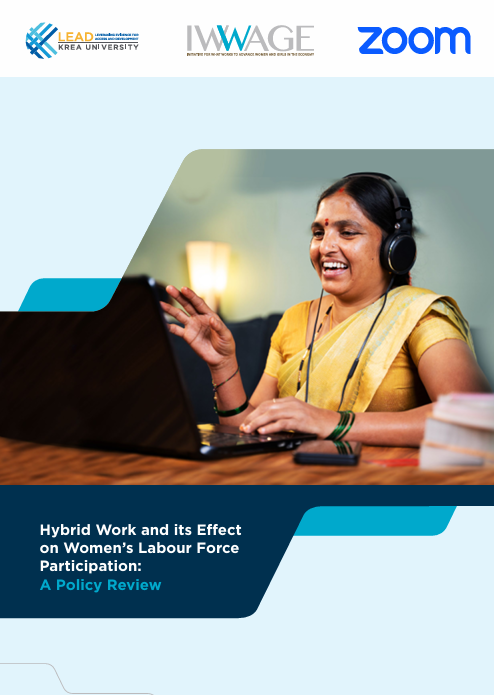
Hybrid Work and its Effect on Womens Labour Force Participation

The COVID-19 pandemic redefined workspaces globally, with many organisations adopting hybrid work models that offer employees flexibility between working from home and in the office. In India, this shift holds potential to increase women’s participation in the workforce, as hybrid work can help women balance care responsibilities, safety concerns, and mobility challenges. However, it also presents unique challenges for women, including increased stress, burnout, and a heavier burden of unpaid care work. This policy review highlights the need for gender-inclusive hybrid work policies, drawing on global best practices and insights from 60 countries. It reveals that while hybrid models are becoming the norm, there is a lack of specific provisions addressing women’s unique needs. In India, the absence of comprehensive remote work policies and gender-responsive guidelines further complicates the situation, despite some initiatives like the Maternity Benefit Act and the Sexual Harassment at Workplace Act extending protection to remote work. This publication calls for concerted efforts by both government and private sectors to develop gender-responsive hybrid work policies. Recommendations include transparent compensation policies, clear communication channels, flexible evaluation systems, childcare support, and training for managers to ensure a gender-inclusive work environment. By adopting these measures, organisations can minimise attrition, maximise retention, and create a more equitable hybrid workplace for women.
Scroll to Top