

Chhattisgarh records a significantly higher female labour force participation rate than the national average, particularly in rural areas, with rising women’s participation evident since before 2016. Tribal women participate in the labour market at much higher rates than non-tribal women, but most are engaged in self-employment, with a large share working as unpaid family workers. While schemes such as Mahila Kosh and the National Rural Livelihoods Mission aim to promote women’s financial independence, the dominance of unpaid work highlights the need for a deeper examination of labour market conditions and opportunities for women in the state.
Care Economy
Women’s low labour force participation in India is closely linked to the unequal burden of unpaid care and domestic work. Evidence from India’s Time Use Survey shows that women and girls spend significantly more time on unpaid household and caregiving responsibilities than men and boys, while paid care work remains largely feminised, undervalued, and characterised by low wages and limited social protection. Addressing the care economy is therefore critical to advancing women’s economic participation and building inclusive labour markets.
IWWAGE’s work on the care economy focuses on:
Building evidence through collaboration
Generating and co-creating policy-relevant evidence in partnership with research institutions, governments, and civil society to highlight the scale, value, and distribution of care work.
Strengthening care and social infrastructure
Advocating investments in care services and enabling infrastructure such as childcare, elder care, piped water, clean energy, and reliable electricity to reduce women’s unpaid care burden.
Improving measurement and visibility of care work
Advancing better tools and methods to measure unpaid and paid care work, ensuring women’s contributions are visible in data, policy, and planning processes.
Advancing rights and protections for care workers
Supporting policy dialogue on fair wages, social protection, and access to entitlements for paid care workers.
Influencing policy and advocacy
Using evidence to inform policy across national and sub-national levels through sustained engagement with key institutions, including NITI Aayog, the Ministry of Women and Child Development, and the Ministry of Rural Development.
This body of work has strengthened national and international attention to care workers’ needs, including during India’s G20 Presidency in 2023, and contributed to IWWAGE being recognised by UNESCAP and UN Women (Regional Office) as a Care Champion in the region for 2024.
Brief
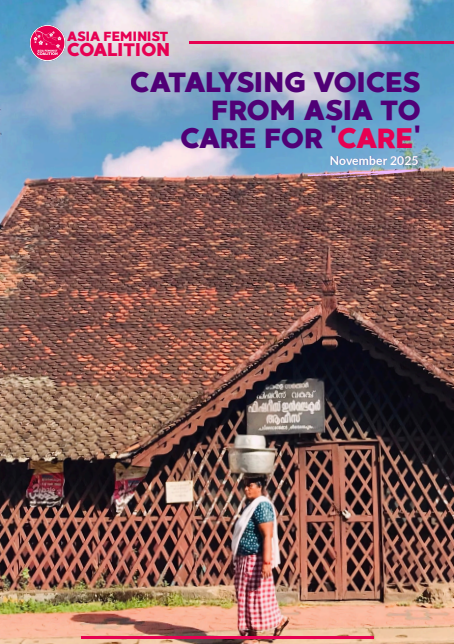
Catalysing Voices From Asia To Care For ‘Care’
- November , 2025
- Sruthi Kutty, Amna Khan
This publication supports evidence-based advocacy on care work in South Asia, drawing from the coalition’s shared experiences. It presents our demands for building equitable, care-centred economies. The publication is free to use for advocacy, education, and research, with reproduction encouraged when the source is acknowledged.
This publication supports evidence-based advocacy on care work in South Asia, drawing from the coalition’s shared experiences. It presents our demands for building equitable, care-centred economies. The publication is free to use for advocacy, education, and research, with reproduction encouraged when the source is acknowledged.
Brief
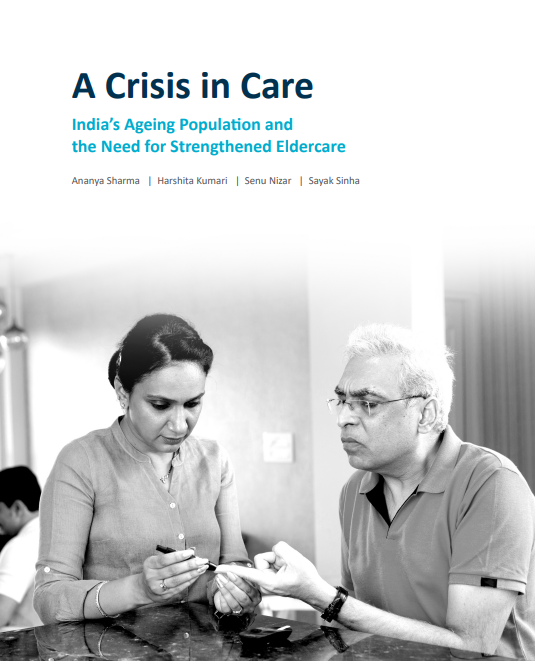
A Crisis in Care India’s Ageing
- September , 2025
- Ananya Sharma, Harshita Kumari
The global population is ageing, presenting complex challenges and new opportunities.The policy brief draws on insights from a roundtable discussion that brought together sectoral experts, practitioners, and academics, along with secondary research.The discussion served as a platform to examine the current state of eldercare in India, identify critical gaps, and explore actionable solutions to increase women’s participation in the formal eldercare workforce.
The global population is ageing, presenting complex challenges and new opportunities.The policy brief draws on insights from a roundtable discussion that brought together sectoral experts, practitioners, and academics, along with secondary research.The discussion served as a platform to examine the current state of eldercare in India, identify critical gaps, and explore actionable solutions to increase women’s participation in the formal eldercare workforce.
Factsheet
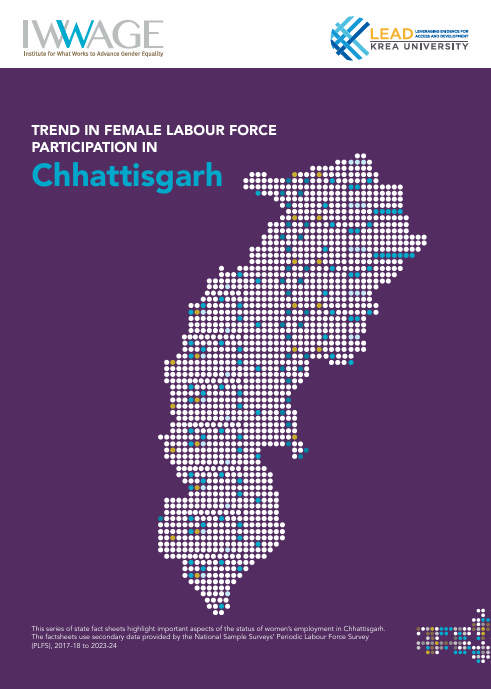
Trend in Female Labour Force Participation in Chhattisgarh
- April , 2025
- Aneek Choudhary and Bidisha Mondal
Chhattisgarh records a significantly higher female labour force participation rate than the national average, particularly in rural areas, with rising women’s participation evident since before 2016. Tribal women participate in the labour market at much higher rates than non-tribal women, but most are engaged in self-employment, with a large share working as unpaid family workers. While schemes such as Mahila Kosh and the National Rural Livelihoods Mission aim to promote women’s financial independence, the dominance of unpaid work highlights the need for a deeper examination of labour market conditions and opportunities for women in the state.
Chhattisgarh records a significantly higher female labour force participation rate than the national average, particularly in rural areas, with rising women’s participation evident since before 2016. Tribal women participate in the labour market at much higher rates than non-tribal women, but most are engaged in self-employment, with a large share working as unpaid family workers. While schemes such as Mahila Kosh and the National Rural Livelihoods Mission aim to promote women’s financial independence, the dominance of unpaid work highlights the need for a deeper examination of labour market conditions and opportunities for women in the state.
Report
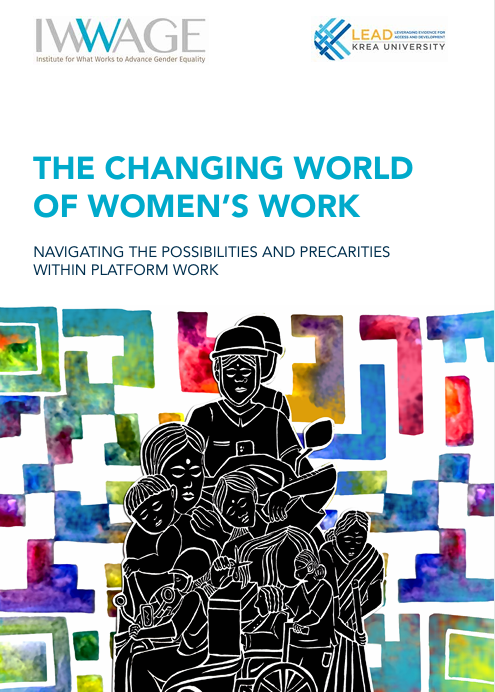
The Changing World of Women’s Work
- April , 2025
- Bidisha Mondal, Prakriti Sharma, Aneek Chowdhury, Anjali S
This study examines women’s participation in India’s platform economy using a mixed-methods approach, combining a survey of 598 platform workers (440 women) across care, domestic, beauty, ride-sharing, and delivery services with qualitative interviews. While platform work offers new entry points and flexibility, it often mirrors and deepens the precarity of informal work, limiting its potential for women’s empowerment. Persistent challenges include income instability, high entry and platform costs, limited social protection, unsafe conditions, and reinforced gender inequalities. Meaningful progress requires coordinated action by policymakers, platforms, and worker collectives to ensure fair earnings, social security, gender-sensitive systems, and effective grievance redressal
This study examines women’s participation in India’s platform economy using a mixed-methods approach, combining a survey of 598 platform workers (440 women) across care, domestic, beauty, ride-sharing, and delivery services with qualitative interviews. While platform work offers new entry points and flexibility, it often mirrors and deepens the precarity of informal work, limiting its potential for women’s empowerment. Persistent challenges include income instability, high entry and platform costs, limited social protection, unsafe conditions, and reinforced gender inequalities. Meaningful progress requires coordinated action by policymakers, platforms, and worker collectives to ensure fair earnings, social security, gender-sensitive systems, and effective grievance redressal
Report
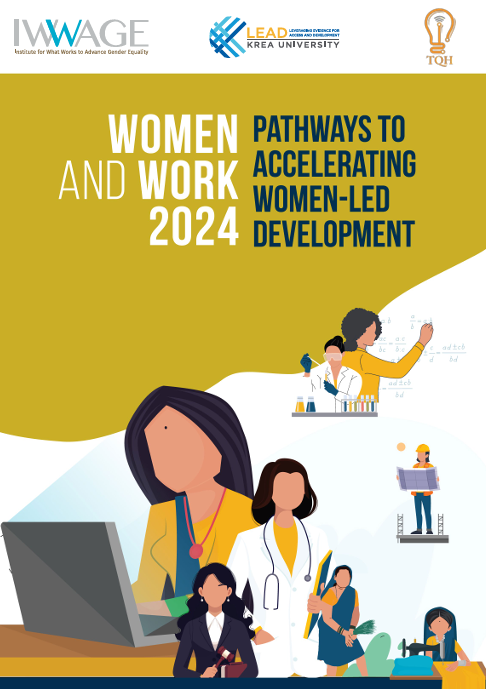
Women and Work: How India fared in 2024
- April , 2025
- Aishwarya Bhuta, Harshita Kumari, Sohinee Thakurta, and Teesta Shukla.
The year 2024 marked a key moment for women and work in India, shaped by economic shifts, policy action, and technological change. Since 2021–22, new challenges and opportunities have influenced women’s workforce participation, alongside renewed efforts to advance women’s economic empowerment. Building on the vision of women-led development highlighted during India’s 2023 G20 presidency, momentum continued across multiple initiatives. This report examines key trends, policy developments, and emerging challenges shaping women’s work in 2024. Drawing on secondary data and research from IWWAGE and LEAD, it maps the evolving landscape of women’s work in India and identifies pathways to greater inclusion and economic agency.
The year 2024 marked a key moment for women and work in India, shaped by economic shifts, policy action, and technological change. Since 2021–22, new challenges and opportunities have influenced women’s workforce participation, alongside renewed efforts to advance women’s economic empowerment. Building on the vision of women-led development highlighted during India’s 2023 G20 presidency, momentum continued across multiple initiatives. This report examines key trends, policy developments, and emerging challenges shaping women’s work in 2024. Drawing on secondary data and research from IWWAGE and LEAD, it maps the evolving landscape of women’s work in India and identifies pathways to greater inclusion and economic agency.