

Women in
Leadership
At IWWAGE, we view women’s leadership as a critical driver of women’s economic empowerment and inclusive national development. Despite comprising nearly half the population, women remain underrepresented in decision-making roles across economic, political, and social spheres. Strengthening women’s leadership across sectors and levels is essential to ensuring that policies, institutions, and markets reflect women’s lived realities and deliver equitable outcomes.
IWWAGE’s work on women in leadership focuses on:
Advancing women’s representation in decision-making
Promoting women’s leadership across grassroots governance, entrepreneurship, corporate leadership, and policy and research institutions to strengthen inclusive growth and governance.
Addressing structural barriers to leadership
Examining gaps in mentorship, sponsorship, networks, skills, and access to resources that limit women’s upward mobility, particularly in sectors such as technology, finance, manufacturing, and the informal economy.
Strengthening leadership pathways in the informal economy
Supporting women in informal and precarious work to transition from participation to leadership through skills development, entrepreneurial support, and access to economic opportunities.
Enabling gender-transformative institutions
Highlighting how women’s leadership in public spaces and governance leads to more responsive policies on equal pay, workplace safety, maternity benefits, and family-friendly work arrangements.
Leveraging evidence for policy and practice
Drawing on IWWAGE’s extensive experience in Women’s Economic Empowerment (WEE) to inform policies, programmes, and institutional reforms that foster women’s agency and leadership.
Key areas of engagement include:
- Women’s entrepreneurship
- Local governance and political leadership
- Leadership in finance, business, and economics
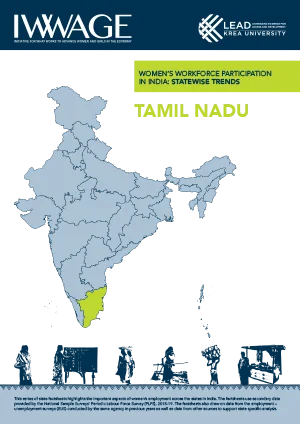
Women’s Workforce Participation in India: Statewise Trends
- March , 2021
- Nidhi Gyan Pandey