

Climate Change

IWWAGE’s work on climate change recognises that climate impacts are not gender-neutral. Climate stressors disproportionately affect women, girls, and socially marginalised communities, intensifying existing inequalities related to livelihoods, mobility, care responsibilities, and access to resources. IWWAGE examines these challenges through a gender equality, disability, and social inclusion (GEDSI) lens to ensure that climate responses are equitable, inclusive, and grounded in lived realities.

IWWAGE’s work on climate change focuses on:

Climate-induced migration and livelihoods

Analysing how climate shocks and slow-onset changes shape migration patterns, work opportunities, and vulnerabilities, particularly for women and marginalised groups.

Care burdens in a changing climate

Examining the invisible and expanding burden of unpaid care and domestic work as climate stress increases pressures on households and communities.

Women and access to clean

Assessing women’s access to clean, affordable, and reliable energy and its implications for health, livelihoods, time use, and resilience.

Gender-responsive climate policy and programmes

Reviewing the design and implementation of climate policies, adaptation strategies, and interventions to identify gaps and promote inclusive, intersectional approaches.

Strengthening agency and resilience

Advocating for climate action that meaningfully includes women and marginalised communities in decision-making and strengthens their capacity to adapt and lead.

Through this work, IWWAGE aims to inform socially just and gender-responsive climate action that addresses structural inequalities, enhances resilience, and ensures that no one is left behind.
Learning note

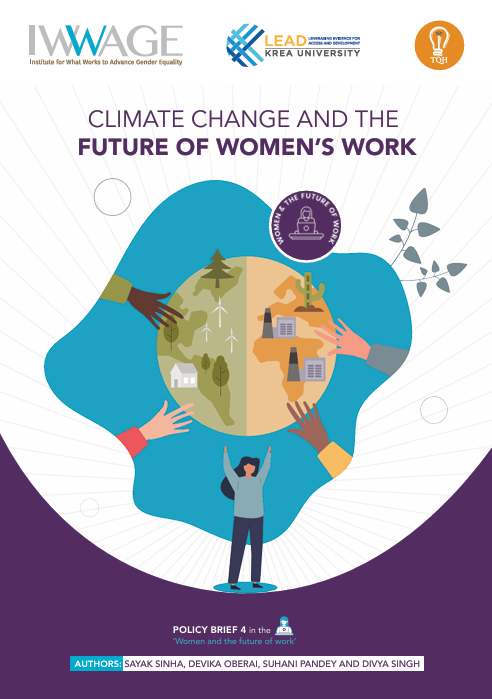
Climate Change and the Future of Women’s Work

Climate change is a pressing global challenge that exacerbates existing inequalities, disproportionately affecting women, girls, and marginalised communities. Due to persistent gender inequalities, women face unique challenges in adapting to climate-induced disasters, often lacking access to resources, financial services, and decision-making platforms needed to rebuild livelihoods. As a result, they are often slower to recover compared to men. International frameworks, such as the United Nations Framework Convention on Climate Change (UNFCCC) and the Lima Work Program on Gender, stress the importance of integrating gender perspectives into climate policies. However, there is a lack of sex-disaggregated data to fully understand the impact of climate change on women’s workforce participation. This highlights the urgent need for research on how climate change affects women’s livelihoods and the importance of advocating for policies that protect their participation in existing sectors while empowering them to enter emerging industries. By addressing these gendered impacts, we can create more equitable and sustainable solutions to climate change, ensuring that women play a key role in building climate-resilient communities.
Scroll to Top