Second World Summit for Social Development | November 4-6, 2025 | Doha
The Government of India has demonstrated a strong commitment to advancing women-led development. This commitment was underscored during India’s G20 Presidency, which culminated in the New Delhi Leaders’ Declaration—a landmark recognition of the importance of enhancing women’s full, equal, effective, and meaningful participation in decision-making. The Declaration emphasizes that women’s active engagement across all spheres of society, in every sector, and at all levels of the economy is not only central to achieving gender equality, but also vital for boosting global GDP growth.
In this context, a panel is proposed as part of the side event which will focus on illustrating scalability of institutions for growth and inclusion of women members of collectives, promoting economic empowerment via sustainable livelihood creation, effective service delivery of government programmes and building overall agency.
The proposed panel will be hosted by the Institute for What Works to Advance Gender Equality (IWWAGE), Technical partner to the Ministry of Rural Development (MoRD), Government of India. IWWAGE is an independent centre, hosted by LEAD at Krea University. It aims to strengthen and inform social and economic policies through research and advocacy. IWWAGE is a policy think tank providing evidence-based solutions for advancing women’s economic empowerment.
Over the past six years, the IWWAGE–MoRD partnership in India has pioneered innovative participatory learning approaches for gender integration by strengthening the capacities of DAY-NRLM staff, cadres, and institutional mechanisms at the sub-national level, support in drafting Government advisories and knowledge pieces, designing gender responsive management information system. A key focus has been on ensuring that these approaches are scalable and replicable across diverse women’s empowerment programs, offering valuable lessons for global replication.
The panel will delve on:
- What are the enablers and barriers to establish functional women’s institutions
- Sharing India’s experience in piloting gender-transformative models
- Mechanisms to move towards gender-transformative policymaking through robust public finance strategies
And would deliberate on illustrated examples of
- Institutional strengthening and Gender-Transformative Models
- Policy and Systems Change for gender responsiveness in governance
- Efficient use of Evidence and Accountability for promoting diversity and inclusion
- Collaborative actions with governments for comprehensible impact on ground
In case you were unable to join us, you can view the recorded session here: Passcode: sYC%RU7+
ALSO SEE
Second World Summit for Social Development | November 4-6, 2025 | Doha
The Government of India has demonstrated a strong commitment to advancing women-led development. This commitment was underscored during India’s G20 Presidency, which culminated in the New Delhi Leaders’ Declaration—a landmark recognition of the importance of enhancing women’s full, equal, effective, and meaningful participation in decision-making. The Declaration emphasizes that women’s active engagement across all spheres of society, in every sector, and at all levels of the economy is not only central to achieving gender equality, but also vital for boosting global GDP growth.
In this context, a panel is proposed as part of the side event which will focus on illustrating scalability of institutions for growth and inclusion of women members of collectives, promoting economic empowerment via sustainable livelihood creation, effective service delivery of government programmes and building overall agency.
The proposed panel will be hosted by the Institute for What Works to Advance Gender Equality (IWWAGE), Technical partner to the Ministry of Rural Development (MoRD), Government of India. IWWAGE is an independent centre, hosted by LEAD at Krea University. It aims to strengthen and inform social and economic policies through research and advocacy. IWWAGE is a policy think tank providing evidence-based solutions for advancing women’s economic empowerment.
Over the past six years, the IWWAGE–MoRD partnership in India has pioneered innovative participatory learning approaches for gender integration by strengthening the capacities of DAY-NRLM staff, cadres, and institutional mechanisms at the sub-national level, support in drafting Government advisories and knowledge pieces, designing gender responsive management information system. A key focus has been on ensuring that these approaches are scalable and replicable across diverse women’s empowerment programs, offering valuable lessons for global replication.
National Consultation on ‘Platform Work as an Enabler for Women’s Economic Empowerment’ | September 3, 2025 | New Delhi
Women’s participation in the platform economy is particularly significant given longstanding gender disparities in workforce engagement. The sector’s promise of flexible work schedules holds potential to address some barriers women face in balancing paid employment with domestic and caregiving responsibilities. At the same time, women are often at risk of being clustered in gendered roles, which tend to be informal, low-paid, and precarious, exposing them to challenges such as inconsistent earnings, lack of social protection, safety risks, and limited opportunities for career advancement.
Recognising these complexities, this consultation brings together experts from labour organisations, think tanks, policymakers, platforms, and worker collectives to deepen understanding of women’s economic empowerment in the platform economy. It aims to explore how platform work affects women’s labour transitions, job experiences, and access to protections. Our study complements this by examining digital mediation, care responsibilities, and collective organising. Together, the consultation and study seek to generate actionable insights to inform policies that support inclusive growth and empowerment for women in India’s platform economy.
The consultation will explore how digital platforms and key stakeholders shape women’s access to platform work, employment opportunities, working conditions, and social protections. It will assess whether platform work truly offers meaningful flexibility, income stability, and pathways for career advancement, while identifying persistent gaps and challenges. Furthermore, the discussion aims to identify critical policy and institutional measures necessary to ensure that platform work promotes women’s economic empowerment and safeguards their labour rights effectively.
We look forward to expert perspectives that will not only validate the findings of our study but also contribute to shaping effective strategies for advancing gender-equitable work in India’s platform economy.
Promoting Women’s Engagement in the Gig Economy, IWWAGE at Access Livelihoods Summit 2024
At the 2024 Livelihoods India Summit, organised by ACCESS Development Services, IWWAGE – LEAD at Krea University co-curated an insightful session titled Promoting Women’s Engagement in the Gig Economy. The discussion brought together leading experts and practitioners working at the intersection of gender and the digital economy to explore the potential of platform-based work for women in India.
The session highlighted the transformative opportunities the digital gig economy offers – particularly its flexibility, accessibility, and capacity to create new pathways for women’s economic participation. It acknowledged how digital platforms can enable women to overcome traditional barriers, manage caregiving responsibilities, and tap into a wider marketplace for their skills and services.
However, the discussion also shed light on the persistent challenges that continue to limit women’s engagement in the gig economy, including unequal access to digital tools and skills, financial constraints, and entrenched social norms. Recognising these hurdles, the session delved into actionable strategies to promote women’s inclusion – from digital literacy initiatives and upskilling programmes to improved access to finance, mentorship, and policy-level interventions.
Roundtable Consultation on ‘Emerging Elderly Care Models – Opportunities for Improving Women’s Engagement in Caregiving’
The roundtable consultation on ‘Emerging Elderly Care Models – Opportunities for Improving Women’s Engagement in Caregiving’ was held on November, 12, 2024 at the Ambassador Hotel, New Delhi. Moderated by Dr. Sona Mitra, Director of Research and Policy at IWWAGE, and co-hosted by IWWAGE and The Quantum Hub as part of the Future of Work series, the event aimed to explore the complexities of elderly care and the challenges of integrating women into the formal caregiving workforce.
The event featured an esteemed panel of experts from academia, industry, and policy. Discussions sought to unpack the opportunities and challenges within the elder care sector, highlighting its crucial role in empowering women economically.
Radha Chellappa, Executive Director, IWWAGE, began the session by emphasising IWWAGE’s strategic focus on the care economy. She noted, “The lack of elder care support significantly reduces women’s participation in the workforce. Geriatric care must adopt a multidimensional approach, extending beyond physical needs to holistic well-being.”
Sonakshi Chaudhry, Manager, Strategic Partnerships & Communications, The Quantum Hub, provided a demographic analysis, drawing attention to India’s ageing population and the feminisation of ageing, which sees elderly women facing heightened vulnerabilities due to limited financial independence. She stated, “The elder care market holds immense potential. A 2% investment of GDP could create 11 million jobs, addressing gendered occupational segregation and boosting women’s employment through technology-driven health services.”
Participants examined innovative models, including Japan’s community care hubs and Denmark’s universal elder care systems. Indian initiatives, such as Bengaluru’s Nightingale Centres and the Ministry of Social Justice’s Integrated Centres for Senior Citizens, were commended. Kerala’s palliative care policy was highlighted as a replicable example of community-led, nurse-centric care.
The discussions underscored the need for robust policies to address the feminisation of ageing and ensure affordable elder care. Dipa Sinha, Independent Researcher advocated for stronger social security measures, such as pensions for informal workers. Mini Sukumar, Member, Kerala State Planning Board, showcased Kerala’s community-based programs that bridge funding and resource gaps.
Workforce transformation was a key focus, with recommendations for upskilling caregivers, improving job stability through flexible arrangements, and fostering international opportunities. Mitali Nikore, Founder, Nikore Associates, proposed leveraging public-private partnerships (PPPs) to reimagine skill development and create aspirational career pathways in elder care.
Sonal Shah, Founder – The Urban Catalysts emphasised the role of spatial planning in developing elder-inclusive urban environments, such as multigenerational care facilities that promote intergenerational engagement and reduce caregiving burdens. Debasis Barik, Senior Fellow – NCAER stressed the importance of early healthcare interventions for middle-aged individuals to ensure healthier ageing populations and reduce future care needs.
Speakers, including Karina Bhasin, Program Manager, UNDP and Priya Anant, Founder, LifeCircle Home Care, discussed the transformative potential of technology in elder care, such as virtual care ecosystems and monitoring platforms. However, they cautioned that the human touch in caregiving remains irreplaceable, calling for balanced integration of technology.
In her closing remarks, Professor Rama Baru, former Professor at JNU, called for greater state involvement to ensure equitable elder care solutions. She stated, “The government must balance regulation with affordability, leveraging partnerships without abdicating responsibility.”
The roundtable concluded with actionable recommendations, including developing elder-inclusive infrastructure, fostering care entrepreneurship, and creating pathways for intergenerational knowledge transfer.
IWWAGE at the second edition of the Asia Pacific Care Forum in Bangkok
The second edition of the Asia Pacific Care Forum took place in Bangkok from 22 to 24 October 2024. Organised by UN Women and the Global Alliance for Care (Alianza Global por los Cuidados), alongside various partners, the forum brought together a diverse array of stakeholders from across the Asia-Pacific region. Over three days, participants collaborated to develop a shared vision for reshaping economies with “care” at their core.
Sruthi Kutty, Senior Policy Manager at the Institute for What Works to Advance Gender Equality (IWWAGE), co-facilitated a dynamic breakout session with Civil Society Organisations to craft a “Vision for Transforming Care Systems in Asia Pacific.”
The session’s insights were shared during a plenary panel discussion, which explored opportunities, challenges, and recommendations for strengthening the care economy and advancing women’s economic empowerment.
Nansiri Iamsuk, Migration Programme Specialist at UN Women Asia and the Pacific, moderated the session. Other panellists included YB Puan Anfaal Binti Saari, Chair of the Standing Committee on Women & Family Empowerment, Social Welfare & Care Economy, Selangor State Government, Malaysia; Dr Seema Bhatia-Panthaki, Director of the Gender Equality Platform at AVPN; and Ricar Pascoela, Director of the Working Women’s Center, Timor-Leste.
National Conclave on Gender Mainstreaming
The Gender Snapshot Report by the United Nations (2023) highlights slow progress towards Sustainable Development Goals (SDGs) for 2030. It projects that by 2030, over 340 million women and girls may live in extreme poverty, and close to one in four will face food insecurity. Urging immediate action, the report calls for integrated approaches, greater collaboration, sustained funding, and policy reforms to achieve gender equality and empowerment.
The G20 declaration reinforces this urgency with a focus on reducing gender gaps in labour force participation, promoting equal access to education, and increasing women’s participation in STEM and digital fields. It also emphasizes promoting access to social protection, eliminating gender-based violence, and ensuring women’s inclusion in the formal financial system.
IWWAGE at the 2nd Gender Dialogues, organised by UN Women and the Norwegian Embassy in New Delhi
Sona Mitra participated in the second Gender Dialogues, organised by UN Women and the Norwegian Embassy in New Delhi, to discuss the crucial issue of shaping policy actions for building a comprehensive care ecosystem. The second Gender Dialogue was organised on September 14, 2024
IWWAGE – an initiative of LEAD at Krea University – is dedicated to advancing Women’s Economic Empowerment (WEE). By collaborating with diverse stakeholders, IWWAGE strives to contribute to the development of an enabling care ecosystem that not only empowers women but also drives inclusive economic growth and development.
Workshop on Capturing Women’s Work (CWW) held at India Habitat Centre, New Delhi on July 24, 2024
Workshop on Capturing Women’s Work (CWW) held at India Habitat Centre,
New Delhi on July 24, 2024
The workshop on Capturing Women’s Work (CWW) took place on July 24, 2024, at the Indian Habitat Centre, New Delhi. Hosted by IWWAGE, the event aimed to address the complexities and challenges in accurately measuring women’s work.
The inaugural session featured key insights from Radha Chellappa, Executive Director, IWWAGE, Neeta Goel, Country Lead, “Measurement, Learning and Evaluation, Bill & Melinda Gates Foundation, Foundation and Sona Mitra, Director – Policy and Research, IWWAGE, focusing on findings from the IWWAGE study.
Led by Sona Mitra, the IWWAGE research team showcased their findings from the study titled “Capturing Women’s Work to Measure Better which aimed at developing better mechanisms for data collection by employing innovative probing techniques and sampling frames tailored to capture the nuances of women’s work. Additionally, the session emphasized the importance of creating a robust framework for conducting women-specific surveys that could be aligned with national Labour Force Surveys (LFS). This would help in obtaining more comprehensive estimates of women’s labor force participation. The session concluded with a series of participant inquiries. The presentation of time use findings sparked discussions about how women’s time allocation evolves with age, specifically when unpaid domestic work becomes a daily routine, and the factors contributing to the transition from ‘girl’ to ‘woman’.
The second half of the presentation focused on findings around identifying and addressing the significant perception bias that often underestimates women’s economic contributions (in cases where the respondent is not the woman herself) were presented. Through these efforts, the sessions aimed to advance methodologies that more accurately reflect women’s roles in the economy.
Findings from the CWW study revealed notable gaps between self-reported data and societal perceptions, highlighting the need to include unpaid domestic work in workforce measurements for greater accuracy.
Discussions also covered the economic valuation of unpaid work, the impact of household characteristics on perceptions, and the significance of detailed recovery questions. Key points included discrepancies between the PLFS 2022-2023 and CWW survey estimates of female labor force participation rates, as well as concerns about the lack of a 180-day principal activity benchmark and the survey’s ability to accurately capture women’s work, particularly in Jharkhand.
The workshop ended with a panel discussion, moderated by Yamini Atmavilas, bringing together experts like Jeemol Unni, Madhura Swaminathan, Rosa Abraham, Neetha N, and PC Mohanan. They discussed innovations in measurement methods and the limitations of current survey instruments. Emphasis was placed on the need for regular Time Use Surveys (TUS) and refining survey tools to capture the dynamic nature of women’s work, including unpaid care and domestic activities. The panel concluded that improving measurement accuracy and recognizing the economic value of women’s work are essential for addressing historical underreporting and better informing policy decisions.
Workshop on Financing Quality Childcare Facilities in India held at Ambassador Hotel, New Delhi on August 22, 2024
On 22 August 2024, IWWAGE, in collaboration with Mobile Creches, hosted a workshop on “Financing Quality Childcare Facilities in India.” The event aimed to bring together experts, policymakers, and practitioners to deliberate on creating sustainable childcare solutions across various settings, including urban slums, construction sites, and government premises.
The workshop commenced with opening remarks from Sona Mitra, Director of Policy and Research at IWWAGE, who set the context for the day. This was followed by a keynote address from Amneet P. Kumar, Commissioner & Secretary to the Government of Haryana, WCD, chaired by Chavi Vohra, Executive Director of Strategy & Impact at Mobile Creches.
Building Resilient Communities: Women and Sustainable Ecosystems
IWWAGE at the convening organised by the National Commission for Women – India, National Disaster Management Authority (NDMA)INDIA, and UN Women. “Building Resilient Communities: Women and Sustainable Ecosystems” on July 30, 2024
On July 30, 2024, at Sushma Swaraj Bhawan in New Delhi, Moumita Sarkar, Co-Lead of SWAYAM, IWWAGE, participated in a thought-provoking panel discussion at a multi-stakeholder convening organised by the National Commission for Women – India, the National Disaster Management Authority (NDMA) INDIA, and UN Women.
The session, titled ” Social Protection through NRLM Creating an Enabling Environment through Strengthened Community Institutions: Deendayal Antyodaya Yojana – National Rural Livelihoods Mission” (DAY-NRLM), featured an exceptional panel, including Dr. Sarita Anand from ROSHNI Centre of Women Collectives Led Social Action, Sarbani Bose from PRADAN, and Seema Bhaskaran from Transform Rural India.
Moumita Sarkar explored the intricacies of gender-intentional design within DAY-NRLM, shedding light on SWAYAM’s technical and learning partnership. She shared valuable insights on gender-transformative pilots across various Indian states, emphasising the opportunities they create for grassroots women’s leadership and the pressing need for convergence.
The panel also addressed ongoing initiatives to standardise training resources, provide gender integration advisories, and develop gender operational strategies within DAY-NRLM.
Empowering Women at Work: Advancing the Care Economy
In an interview with “People Matters”, Sona Mitra underscores the importance of creating a care economy that empowers women. Despite being indispensable, the care economy, which includes childcare, elder care, and domestic workers, often remains undervalued and overlooked.
Mitra emphasises the need to recognise and fairly compensate unpaid care work, which is predominantly undertaken by women.
Roundtable on Climate Change and the Future of Women’s Work: A Crucial Dialogue on June 6, 2024
”
Roundtable on Climate Change and the Future of Women’s Work: A Crucial Dialogue on June 6, 2024
On June 6, 2024, IWWAGE, an initiative of LEAD at Krea University, organised and hosted a roundtable on Climate Change and the Future of Womenâs Workers in collaboration with The Quantum Hub (TQH). This event marked the fourth discussion in the Women and the Future of Work Series, jointly conceptualised by IWWAGE and TQH.
The discussion delved deeply into the unique and often disproportionate impacts of climate change on women, highlighting how environmental challenges exacerbate existing gender inequalities. Women, particularly in marginalised communities, are frequently at the forefront of the climate crisis, bearing the brunt of its consequences due to their roles in caregiving, household management, and reliance on natural resources for livelihoods.
A critical point of focus was the pressing need for supportive ecosystems and gender-specific programmes within climate policies. Such initiatives would ensure that women are not only protected from the adverse effects of climate change but also equipped to contribute meaningfully to solutions. Panellists underscored the importance of integrating women’s perspectives into climate planning and action, paving the way for more equitable and sustainable outcomes.
The discussion also addressed the unequal impact of climate change on the poorest countries, where limited resources and existing socio-economic vulnerabilities compound the challenges faced by women. The panellists advocated for targeted investments in gender-transformative infrastructure, including access to clean energy, water, and transportation, as well as the equitable distribution of resources and the implementation of flexible labour laws that accommodate the needs of women workers.
Intersectionality was a recurring theme, emphasising the importance of recognising and addressing the compounded disadvantages faced by women from diverse socio-economic and cultural backgrounds. By adopting intersectional approaches, climate strategies can better respond to the varied experiences of women, ensuring that no one is left behind.
Finally, the discussion highlighted the significance of equipping women with green skills and digital literacy to enable their active participation in the evolving workforce. As economies transition towards more sustainable practices, ensuring that women have the tools and knowledge to thrive in green industries is vital for achieving both gender equality and inclusive economic growth.
This dialogue underscored the urgent need to integrate gender perspectives into climate action strategies.
Related Resources
Capturing Women’s Work Through Time Use Surveys: Implications for Policy
Dr. Ellina Samantroy, Fellow at VV Giri National Labour Institute, joined us for our seminar series on April 22nd, 2024 to discuss “Capturing Women’s Work Through Time Use Surveys and Further Implications for Policy Making. Dr. Samantroy laid the context by highlighting two alarming issues: the gender gap between men and women and the low participation of women in the job market. This is substantiated when we look at the figures in 2023, where 48.7% of women participated in the labor market as compared to 73% of men.
<img class=”aligncenter wp-image-9617″ src=”https://iwwage.org/wp-content/uploads/2024/05/event126-225×300.jpg” alt=”” width=”400″ height=”533″ />
Women’s work participation was continuously decreasing since 2004-05 and then it started increasing after 2017-18. This increase can be attributed to the increased proportion of the self-employed workforce. The question now remains understanding the concentration of self-employed workforce across occupations and sectors. This can be clearly identified by using TUS (Time Use Survey) data.
Highlights from Dr. Samantroy’s seminar are shared below:
TUS is a quantitative summary of how individuals allocate their time over a specified time period- typically over 24 hours in a day or over the 7 days of a week on different activities and how much time they spend on each of these activities. Further, it diversifies activities into three categories: SNA activities (activities that fall within the production boundary of the UN System of National Accounts), non-SNA activities (activities which are not included in national accounts but are covered under the General Production boundary and include delegable production of services) and personal services (non-delegable services eg. sleeping, watching TV, etc.). TUS sheds light on the specific activities the individuals in the reference population are engaged in. It also talks about the time spent on doing certain activities like, average number of hours in a day spent on travelling and unpaid domestic work among other activities.
Shift from NSSO to TUS
Women’s work has not been documented effectively in NSSO surveys, as it provides generalized answers, not delving deeply into certain probing questions. NSSO data does not provide answers for restricted women’s participation based on geographical location. Also, there is a lack of occupational segregation in the survey.
TUS focuses on capturing unpaid domestic activity and other non-market activities.
Additionally it provides information on multiple and simultaneous activities and some other insights using context variables. These variables look at details of the activity, specifically looking into the location, presence of other people when the activity occurred, beneficiary perception, and monetary motivation behind the activity.
TUS gives visibility to the care economy, captures time stress, and improves workforce estimates along with throwing light on the scattered and sporadic nature of informal work. It helps in understanding the percentage of time spent on unpaid domestic and care work by sex, age group, caste, religious group, and location wise.
Highlights from National TUS 2019
They have coded 9 activities under TUS.
Participation rates of women workers in unpaid domestic services for household members are 94.5% and 87.9% in rural and urban areas respectively. Compared to men workers, participation rates are 33.7% and 24.6% in rural and urban areas respectively.</li>
The average time spent by women workers on unpaid domestic services for household members are 4.1 hours and 3.6 hours in rural and urban areas, respectively. On the other hand, the average time spent by male workers on unpaid domestic services for household members is 1.6 hours and 1.5 hours in rural and urban areas, respectively.
Under the unpaid domestic services, women are involved in care and maintenance of textiles, footwear, food and meals preparation and cleaning and maintenance of surroundings across both rural and urban areas.
The average time spent by women in unpaid domestic work is around 2.5 hours, primarily in food and meal preparation. Digging deep into unpaid caregiving services, around 20-23% of women are engaged in childcare and instruction across rural and urban areas. Additionally, the average time spent on unpaid caregiving services, specifically in childcare and instruction is around 1.7 hours across both rural and urban areas for women.
Limitations of TUS:
Inadequate capturing of informal work
Lack of harmonization with international classification
Methodological limitations
Too expensive
Recommendations:
Addressing self-employment through TUS
Addressing the concerns of marginalized communities across geographical regions
Capacity building of stakeholders
Mainstreaming TUS
Need for revisiting and sharpening the use of context variables
If you would like to see the presentation, please visit the link <a href=”https://iwwage.org/wp-content/uploads/2024/05/IWWAGE_Lecture.pdf” target=”_blank” rel=”noopener”>here.</a>
In case you missed the online seminar, you may view it
Capturing Women’s Work Through Time Use Surveys: Implications for Policy
Dr. Ellina Samantroy, Fellow at VV Giri National Labour Institute, joined us for our seminar series on April 22nd, 2024 to discuss “Capturing Women’s Work Through Time Use Surveys and Further Implications for Policy Making. Dr. Samantroy laid the context by highlighting two alarming issues: the gender gap between men and women and the low participation of women in the job market. This is substantiated when we look at the figures in 2023, where 48.7% of women participated in the labor market as compared to 73% of men.
Women’s work participation was continuously decreasing since 2004-05 and then it started increasing after 2017-18. This increase can be attributed to the increased proportion of the self-employed workforce. The question now remains understanding the concentration of self-employed workforce across occupations and sectors. This can be clearly identified by using TUS (Time Use Survey) data.
Highlights from Dr. Samantroy’s seminar are shared below:
Background of TUS:
TUS is a quantitative summary of how individuals allocate their time over a specified time period- typically over 24 hours in a day or over the 7 days of a week on different activities and how much time they spend on each of these activities. Further, it diversifies activities into three categories: SNA activities (activities that fall within the production boundary of the UN System of National Accounts), non-SNA activities (activities which are not included in national accounts but are covered under the General Production boundary and include delegable production of services) and personal services (non-delegable services eg. sleeping, watching TV, etc.). TUS sheds light on the specific activities the individuals in the reference population are engaged in. It also talks about the time spent on doing certain activities like, average number of hours in a day spent on travelling and unpaid domestic work among other activities.
IWWAGE at the 64th Annual Conference of the Indian Society of Labour Economics (ISLE) at Hyderabad, Telangana
IWWAGE participated in the 64th Annual Conference of the Indian Society of Labour Economics held in Hyderabad, Telangana in March 2024. The ISLE engagement included organizing a panel discussion on “care,” participation in a panel on time use methods as well as paper presentations by team members.
PANEL DISCUSSIONS
- Caring for the Caregivers: Pathways to Strengthen the Care Economy
29th March 2024
IWWAGE along with the Institute for Human Development organized a panel on “Caring for the Caregivers: Pathways to Strengthen the Care Economy” which highlighted pressing issues around care based on specific contexts, advocating for better working conditions and facilities including access to key amenities like toilets and transportation. The discussion delved into the scope and environment of care work, emphasizing the need for financing, enhanced investments, and adequate legal frameworks to protect the rights of care workers. The panel was chaired by Yamini Mishra (India Director, Mac Arthur Foundation) with introductory remarks by Sona Mitra (Research & Policy Director, IWWAGE). The panellists included Ritu Dewan (Visiting Professor, IHD), A K Shivkumar (Visiting Professor, IHD), Valeria Esquivel (Employment Policies and Gender Specialist, ILO), and Prabha Kotiswaran (Professor, King’s College London) with Dipa Sinha (Assistant Professor, Ambedkar University, Delhi) joining as a discussant. The session concluded with remarks from Radha Chellappa (Executive Director, IWWAGE) encapsulating the importance of the dialogue and its implications for policy and practice.
2. Integrating Time Use Module with Labour Force Surveys
Organized by the Centre For Women’s Development Studies (CWDS), New Delhi, this panel delved into the possibilities and challenges of integrating time use data into labour force surveys, a crucial step towards understanding the unseen aspects of labour and productivity. The panel was chaired by TCA Anant (Adjunct Professor, Tata Institute of Social Sciences). Sona Mitra (Director – Policy and Research, IWWAGE) presented insights from a primary study that incorporated gendered activities and time-budget components. The esteemed panel was chaired by TCA Anant (Adjunct Professor, Tata Institute of Social Sciences) and also included the following experts: Padmini Swaminathan, Former Director, Madras Institute of Development Studies; G.C. Manna, (Professor, IHD India, Former Director General, CSO and NSSO) P.C. Mohanan (Chairman, Kerala State Statistical Commission), Kripa Ananthpur (Professor, Madras Institute of Development Studies) and Neetha N. (Professor, Centre for Women’s Development Studies).
Caring for the Caregivers: Strengthening Voices of Care in the Global South
Panel discussion titled, Caring for the Caregivers: Strengthening Voices of Care in the Global South at the NGO Committee on the Status of Women (NGO CSW/NY).
IWWAGE, along with its partner Observer Research Foundation (ORF), organized a panel discussion titled, Caring for the Caregivers: Strengthening Voices of Care in the Global South at the NGO CSW68 event on March 15th, 2024. Our speakers spanned different geographies, enriching the discussion. The CSW68 gathering provided a strong platform to carry forward global efforts to mainstream and meaningfully embed the care agenda in macroeconomic planning.
Shamika Ravi, Member, Economic Advisory Council to the Prime Minister (EAC-PM), set the context by emphasizing the critical nature of care work and the need to support women who are disproportionately affected by caregiving responsibilities, especially as they explore work opportunities outside the household. She shared insights about the evolution of care-related policies in India, highlighting the intention to make care a fundamental part of the economy. She also shed light on the fact that the Ministry of Women and Child Development has made serious efforts in the direction of the care economy, indicating the commitment in foregrounding area.
Taking the discussion forward, Sona Mitra, Director- Research and Policy, IWWAGE, elaborated on the advocacy efforts aimed at centering care in policy discussions. She stressed on the importance of focusing on financing for care. Emphasizing the need for investment strategies, she highlighted the need for identifying the different components of care and exploring different financing & investment channels that are necessary for effective care delivery.
The moderator, Sunaina Kumar, Senior Fellow, Observer Research Foundation, took forward points made by Shamika Ravi by highlighting the increased demand for care due to globally shifting demographic trends, increasing young and aging populations, along with the emergence of more nuclear families. She underscored the intrinsic and instrumental value of caregiving, and it is at the heart of human societies, families, and the future of our economies.
Speaking of the Brazilian experience, Luciana Servo, President, I-AER Institute of Applied Economic Research, discussed the need for advocacy around care in the country and the importance of bringing in the care workers as stakeholders in the process of policy making. She focused on the need for addressing lingering gender norms and advocating for policy innovation and international cooperation to address financing challenges. She also talked about how the challenges are bigger and the opportunities are smaller in terms of financing, and that’s where the role of international cooperation and multilateralism is important. It was also inspiring to hear that Brazil is thinking of bringing in the care workers as stakeholders in the process of policy-making.
Gloria Lang at emphasized the universal importance of care while highlighting its under-resourced nature, particularly in terms of investment and caregiver remuneration. She also spoke of the need for highlighting the role of the community in the care economy as well as greater inclusion of geriatric care and care for the disabled in these discussions.
Brett Weisel, Global Policy and Advocacy Lead, Early Childhood Development Action Network (ECDAN) stressed on the interconnectedness of outcomes for women and children, advocating for purposeful linkage of agendas to form powerful political coalitions. He also emphasized the importance of gender-transformative and child-centered systems and grassroots advocacy to support caregivers effectively.
For those interested, a recording of the session is available for viewing.: https://lnkd.in/eVJuQ9rH
Panel discussion titled, “Caring for the Caregivers: Strengthening Voices of Care in the Global South” at the NGO Committee
IWWAGE along with its partner Observer Research Foundation (ORF) organized a panel discussion titled, “Caring for the Caregivers: Strengthening Voices of Care in the Global South” at the NGO CSW68 event on March 15th 2024. Our speakers spanned different geographies enriching the discussion. The CSW68 gathering provided a strong platform to carry forward global efforts to mainstream and meaningfully embed the care agenda in macroeconomic planning.th.
Shamika Ravi, Member, Economic Advisory Council to the Prime Minister (EAC-PM) set the context by emphasizing the critical nature of care work and the need to support women who are disproportionately affected by caregiving responsibilities especially as they explore work opportunities outside the household. She shared insights about the evolution of care-related policies in India highlighting the intention to make care a fundamental part of the economy. She also shed light on the fact that the Ministry of Women and Child Development has made serious efforts in the direction of care economy indicating the commitment in foregrounding “care”.
Panel on “Advancing Women’s Work in Global South: Towards Women’s Empowerment and Gender Equality“ at the IHD Global Conclave 2024
IWWAGE along with Niti Aayog organized a Panel on “Advancing Women’s Work in Global South: Towards Women’s Empowerment and Gender Equality” at the Global Conclave organized by the Institute of Human Development on 12th January, 2024 at the India International Centre.
Chair and Moderator
Sonalde Desai, Distinguished Professor of Sociology, University of Maryland, US, and Professor, National Council of Applied Economic Research (NCAER), New Delhi
Panelists
- Wei-Jun Jean Yeung, Professor and Provost’s Chair, Department of Sociology and Anthropology
- National University of Singapore, Singapore
- Marina Durano, Adviser on Care Economy and Partnership, Engagement, UNI Global Union, Geneva
- Sakshi Khurana, Senior Specialist, Skill Development, Labour & Employment, NITI Aayog, Government of India
- Sona Mitra, Principal Economist, IWWAGE – An initiative of LEAD, Krea University
- Kyoko Kusakabe, Professor, Gender and Development Studies, Asian Institute of Technology, Thailand
- Grace Wamue-Ngare, Professor, Gender and Development Studies, Department of Sociology, Kenyatta University, Nairobi, Kenya
The panel was Chaired by Dr. Sonalde Desai, and included presentations by a diverse group of speakers offer a comprehensive panorama of the intricate landscape surrounding women’s work on a global scale. Sakshi Khurana, Senior Specialist at NITI Aayog, illuminated the gender disparities prevalent in labor force participation, wage pay, and managerial roles, drawing attention to the transformative impact of digital technologies on women. Wei-Jun Jean Yeung provided an insightful analysis of the Asia-Pacific region, detailing economic dynamics, gender parity trends, and the varied challenges confronting women in the region. Marina Durano delved into the constitutional recognition of care work, shedding light on the evolving discourse around the right to work within the framework of a care economy. Sona Mitra’s focus on the declining Female Labor Force Participation Rate in India highlighted the qualitative distinctions in women’s work, with an emphasis on care and unpaid activities. Kyoko Kusakabe’s case study on Thailand explored the nuanced effects of automation and digitization on women’s roles in the workforce. Grace Wamue-Ngare offered a lens into the persistent gender disparities in Sub-Saharan Africa, particularly through the lens of initiatives by the KU-WEE Hub in Kenya aimed at dismantling barriers to Women’s Economic Empowerment. Together, these presentations weaved a rich tapestry that underscore the imperative for nuanced, context-specific strategies to bolster women’s economic participation, acknowledging regional nuances and the intersectional challenges that women face globally.
‘Nayi Chetna – Pahal Badlav Ki’
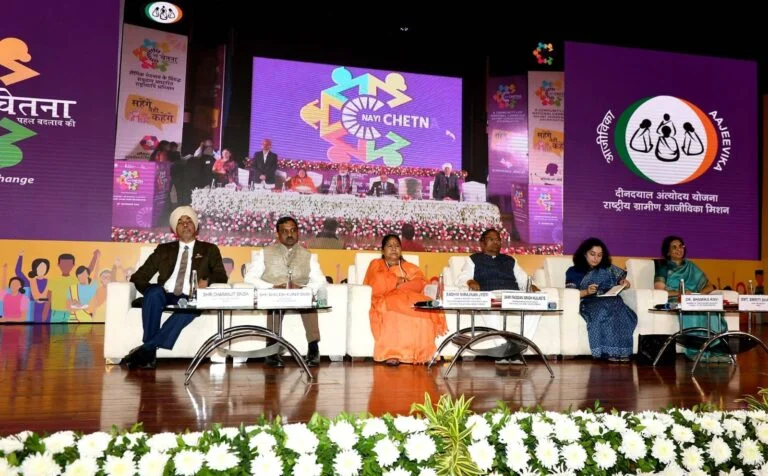
November 25th, 2023 marked the launch of the year two of Nayi Chetna, Pahal Badlaav ki. Institute for What Works to Advance Gender Equality is proud to partner with esteemed Ministry of Rural Development (MoRD) and Deendayal Antyodaya Yojana-National Rural Livelihoods Mission (DAY-NRLM).
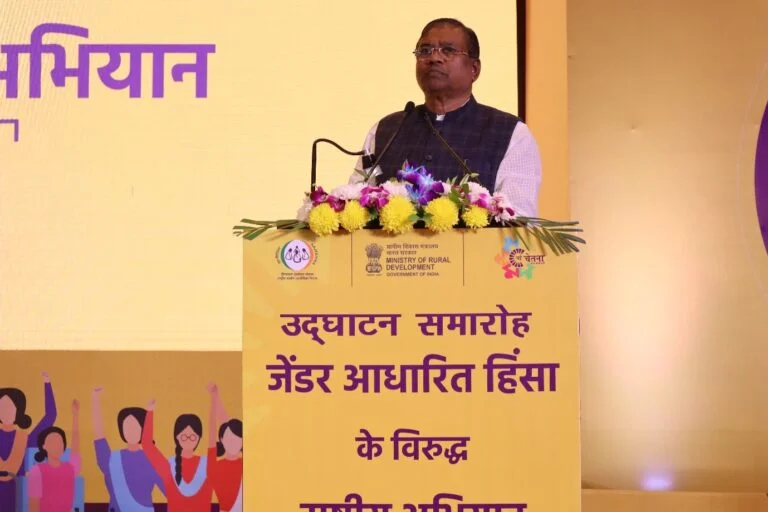
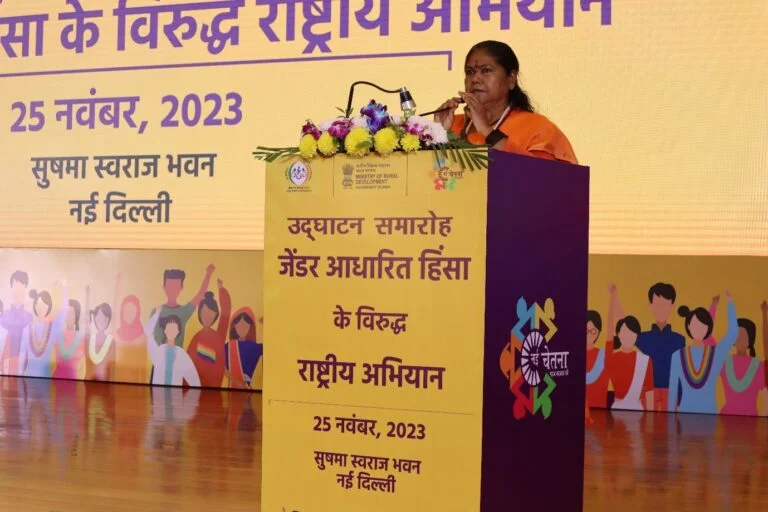
Minister of State for Rural Development and Steel, Shri Faggan Singh Kulaste and Minister of State for Rural Development and Consumer Affairs, Food and Public Distribution, Sadhvi Niranjan Jyoti inaugurated the campaign in New Delhi. Secretary Rural Development, Shri Shailesh Kumar Singh, Addl. Secretary Rural Livelihoods, Shri Charanjit Singh and Member of the Economic Advisory Council to the Prime Minister, Dr. Shamika Ravi, dignitaries and representatives from the State Livelihoods Mission, the banking community, development partners and CSOs, SHG members from across the country were also present in the occasion.
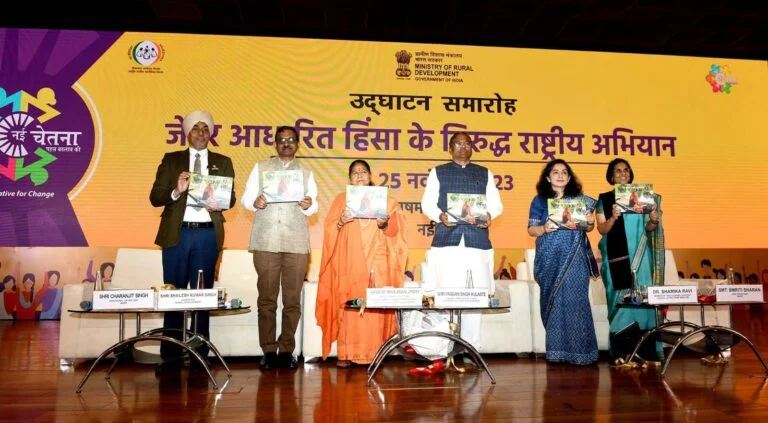
Deendayal Antyodaya Yojana-National Rural Livelihoods Mission (DAY-NRLM) under the aegis of the Ministry of Rural Development announced the commencement of the second year of its flagship annual campaign, Nayi Chetna- Pahal Badlaav Ki, dedicated to address gender issues and eliminating gender-based violence. The launch coincides with the International Day for the Elimination of Violence against Women. The campaign aims to address pressing issues like normalization of violence, reluctance to speak up, lack of awareness of support mechanisms, and the absence of perceived safe spaces.
Violence against women and girls continue to be one of the biggest deterrents to achieving well-being, self-growth and a life of dignity. Physical or psychological violence is a gross violation of basic human rights and impedes women and girls achieving their full potential and living a life of their choice. Gender-based violence is a global pandemic that affects 1 in every 3 women in their lifetime. Evidence reveals that women are often unable to identity violence meted out to them because of normalization of discrimination and violence. Even if they do identify violence, they are unable to share or raise their voice against it to avoid naming and shaming and they continue to suffer in silence. Most women, by and large, are unaware of redressal mechanisms, service providers and lack legal awareness.
DAY-NRLM has been at the forefront of gender empowerment since 2016 and recognizes this social evil as a major hindrance towards achieving individual and social development and hence aims to take necessary actions for eliminating Gender Based Violence. As part of its ongoing effort of mobilizing and addressing issues of marginalized communities and women, DAY-NRLM emphasises on the need for creating institutional mechanisms of responding to issues of violence along with integration of gender in all verticals for a larger perspective shift. Towards this, DAY-NRLM initiated the Nayi Chetna – Pahal Badlaav Ki campaign, which garnered immense success in its first year, mobilizing 3.5 crore people nationwide.
The campaign engages a wide array of stakeholders, including State Rural Livelihood Missions (SRLMs), community institutions, Panchayati Raj Institutions, members of the community, DAY-NRLM verticals, Civil Society Organizations (CSOs), and relevant line Ministries and Departments.
The campaign has been launched for a period of one month with convergence with 13 Ministries/Departments. The campaign will undertake awareness building activities at community levels for sensitisation of all sections of the community. This would include rangoli making, pledge for elimination of gender-based violence, meetings at gram sabha level, essay and drawing competition, etc. In addition, special efforts will be made sensitise panchayat level functionaries on laws pertaining to gender-based violence and creation of safe spaces of women. During the period of campaign, meetings of gender forums will be organised at block level and district level, sensitisation of police station personnels and other functionaries like health workers, schools, etc.
The campaign has been rightly given taglines of ‘Sahenge nahin kahenge’ and ‘Chuppi Todenge’.
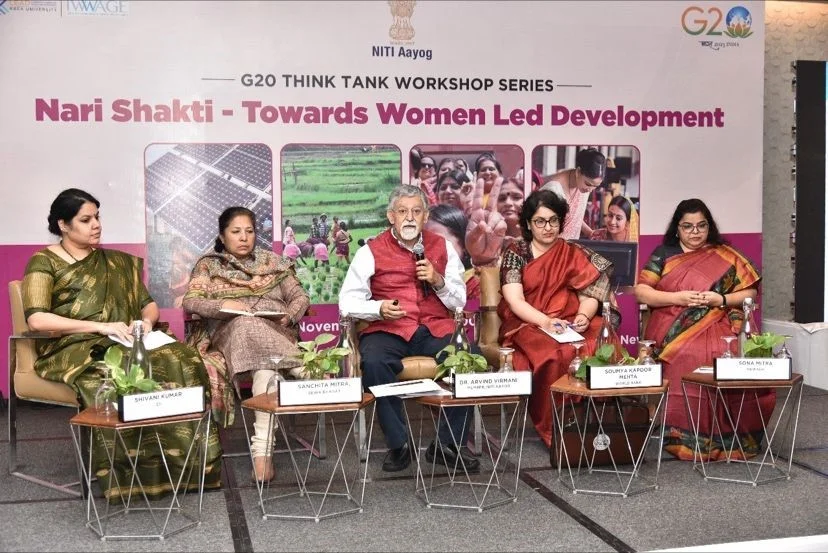
G20 Thematic Workshop on Nari Shakti: Towards Women-Led Development

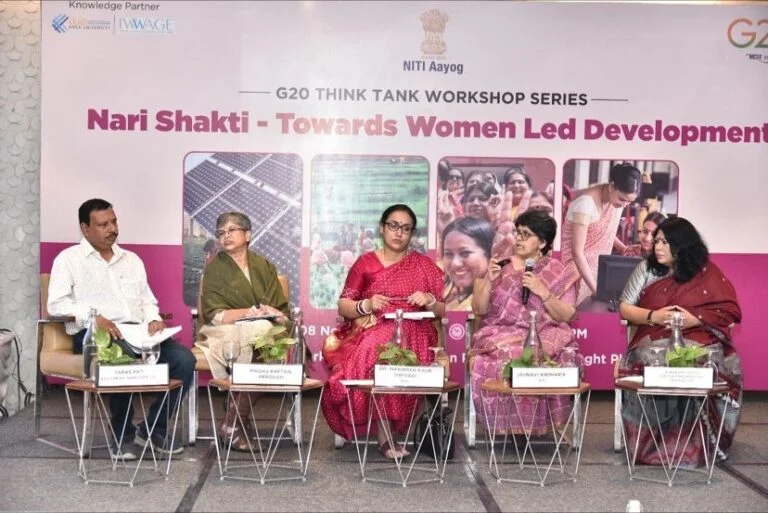
A workshop on the theme of Nari Shakti: Towards Women-led Development, emanating from the New Delhi Leaders’ Declaration 2023 (NDLD 2023), was held on 8 November 2023 at New Delhi. The workshop was organized by NITI Aayog in collaboration with Institute of What Works to Advance Gender Equality (IWWAGE). This workshop was part of the series of thematic workshops steered and anchored by the NITI Aayog towards action items in the NDLD 2023.
The workshop focused on specific themes for enhancing the role of women in economy through economic and social empowerment. Discussions were held of topics of strengthening women’s collectives like Self-Help Groups (SHGs), Farmer Producer Organizations (FPOs); bridging gender skills gap and promoting women entrepreneurs; and strengthening legal safeguards for women’s empowerment.
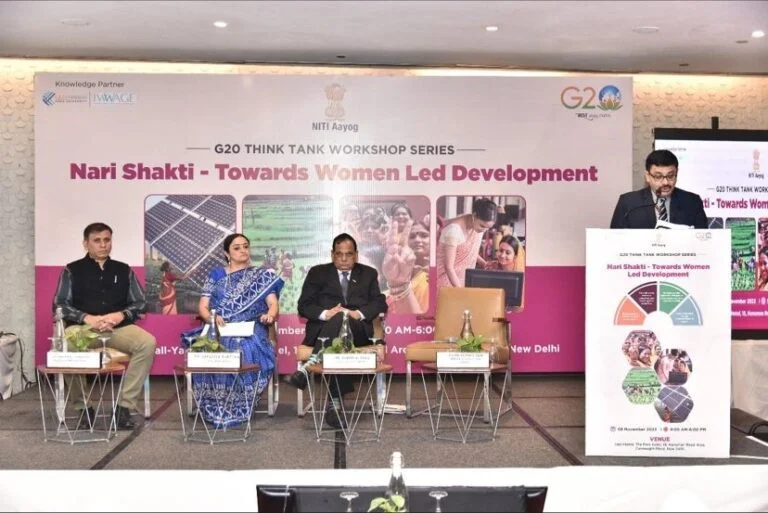
The Workshop commenced with inaugural remarks by Dr. V.K Paul, Member NITI Aayog, where he highlighted that women-led development has been emphasized by our Hon’ble Prime Minister through various initiatives and programmes over the last few years. However, he underscored the challenge of low female labour force participation and stressed upon leveraging their social capital by providing them an enabling ecosystem. He called to synergize pathways of G20 priorities and national agendas, and create actionable strategies to achieve the same.
Dr. Preetam B Yashvant, Joint Secretary, Ministry of Women and Child Development, emphasized of the paradigm shift where women are no longer recipients but active participants in the development discourse. He further highlighted that G20 was truly a Peoples’ Presidency where women-led development was showcased through ‘Jan Bhagdari’ activities.
Dr Sandhya Purecha, Chair W20 India, highlighted that Nari Shakti encapsulates the strength that women embody and women-led development is a moral obligation necessary for equitable society.
The theme on Women in the Economy: Enhancing Women’s Economic and Social Empowerment delved into increasing women’s labour force participation to achieve women-led development. Issues like recognizing gender disparity in domestic and care work; and increasing investment in this sector to enable more women to participate meaningfully in the workforce; exploring the potential of gig economy; bridging gender skill gaps and social security for women; enhancing policies to create gender inclusive and supportive workplaces; and role of private sector to enhance and retain female workforce, were discussed.
The theme on Women’s Collectives: Strengthening SHGs, Women led FPOs and Rural Women’s Leadership Abilities focused on sharing the best practices in the women’s collectives’ space and strategies to scale them pan-India. The segment engaged in developing strategies to enable these women’s collectives reach the next stage of economic empowerment through formation of large producer enterprises or collectives and fostering leadership abilities among rural women.
The theme on Women and the Future of Work: Bridging Digital and Skilling Gaps for Access to Jobs and Strengthening Women’s Entrepreneurship concentrated on enhancing women’s access to digital skills and infrastructure, prioritizing quality and safety, to ensure a secure and inclusive digital literacy experience, fostering greater participation in the digital ecosystem. It also focused on incentivizing employers to promote women’s participation in non-traditional sectors by addressing structural issues that shape gender roles, thereby encouraging women’s entrepreneurship and diversification of career aspirations.
In the segment of Legal Safeguards for the Empowerment of Women, discussions focused on creating an enabling ecosystem by prioritizing women’s safety through improved public infrastructure, strengthening the implementation of gender-friendly laws by effective monitoring, evaluation and placing accountability system, and developing gender-disaggregated data for more evidence-based policy for women-led development.
This workshop provided a platform for experts, academics, experts, and civil society and think tank representatives working on gender empowerment to collaborate and design a roadmap for comprehensive gender equality and empowerment.
Moving Towards Gender Equitable Public Transport Operations in a Post-COVID World
Sonal Shah, the Founder of The Urban Catalysts and Executive Director of the Centre for Sustainable and Equitable Cities, joined us for our seminar series on 21st September 2023 to discuss the impact of COVID-19 on the mobility of women workers in the informal sector.
Shah presented an interesting study conducted by their organization in 2021 which is titled as “Moving Towards Gender Equitable Public Transport Operations in a Post-COVID World.” The key points of the discussion are given below.
She laid down the context of the study by highlighting the impact of the pandemic on women which is as follows:
- Fall in income
- Increase in care work in household
- Increase in domestic violence
The study aimed to-
- To provide evidence and fast-track knowledge uptake to understand the impacts of COVID-19 on resource-poor women’s mobility
- To inform policy guidance and response by low and lower-middle countries in addressing gender equity, safety, and personal security in public transport
- To deep-dive in Delhi with learnings for cities in South Asia